Perched at 1,834 metres above the Bavarian Alps, the Kehlsteinhaus — known to the world as the Eagles Nest — is one of the most dramatically situated buildings ever constructed. Built as a diplomatic gift for Adolf Hitler, it survived the war, escaped demolition, and today stands as a compelling monument to one of history's most turbulent eras.
The Eagles Nest owes its existence not to Hitler's personal ambition, but to the calculated loyalty of Martin Bormann, the powerful Nazi Party secretary. In 1937, Bormann secretly commissioned the construction of a mountaintop teahouse on the Kehlstein peak near Berchtesgaden, Bavaria, as a 50th birthday gift for the Führer. The project was conceived to impress visiting foreign dignitaries and to symbolise the grandeur and engineering might of the Third Reich. The site was chosen for its extraordinary elevation and panoramic views across the Austrian and Bavarian Alps, offering a setting that was simultaneously awe-inspiring and deeply isolated.
Construction of the Kehlsteinhaus began in 1937 and was completed in just 13 months — a feat of engineering widely considered remarkable even by modern standards. Roughly 3,000 workers laboured through harsh Alpine winters to blast a 6.5-kilometre mountain road out of solid rock, carving tunnels, reinforcing sheer cliff faces, and installing a polished brass-lined elevator that rises 124 metres through the heart of the mountain. The total cost of the project was approximately 30 million Reichsmarks — equivalent to hundreds of millions of euros today — funded entirely by Nazi Party coffers rather than the German state. The building was presented to Hitler on his birthday on 20 April 1939.
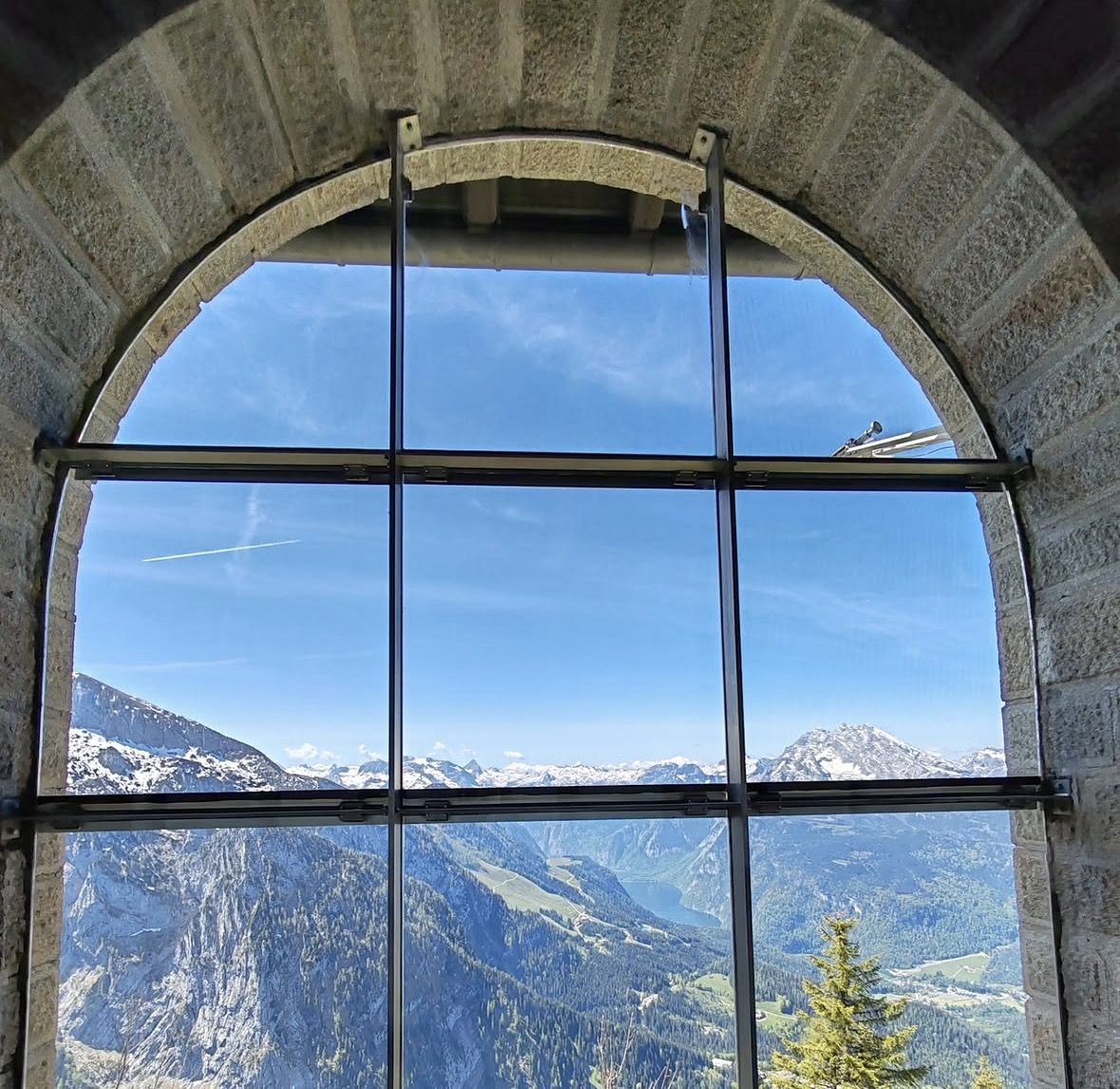
The Kehlsteinhaus itself is a masterpiece of austere Alpine architecture designed by Munich architect Roderich Fick. Built from Salzburg limestone and local granite, the structure blends seamlessly into the rocky summit it crowns. The main hall features a circular marble fireplace gifted by Benito Mussolini, its red Carrara marble still polished and intact today. Large picture windows frame jaw-dropping panoramas of the Berchtesgaden National Park, the Watzmann massif, and — on clear days — the city of Salzburg far below. The building's design prioritised dramatic effect over comfort, functioning as a stage set for the projection of Nazi power to international visitors.
Despite its grand purpose, Hitler himself is believed to have visited the Eagles Nest only around 14 times, reportedly due to his fear of heights and discomfort with the thin mountain air at nearly 1,834 metres elevation. He preferred his nearby Berghof residence lower on the Obersalzberg slopes. However, the teahouse became a favoured venue for Nazi inner-circle gatherings and hosted several significant diplomatic meetings. Among the dignitaries entertained here were French Prime Minister Édouard Daladier and British Ambassador Sir Nevile Henderson, visits that formed part of the appeasement diplomacy preceding the outbreak of World War Two in 1939.
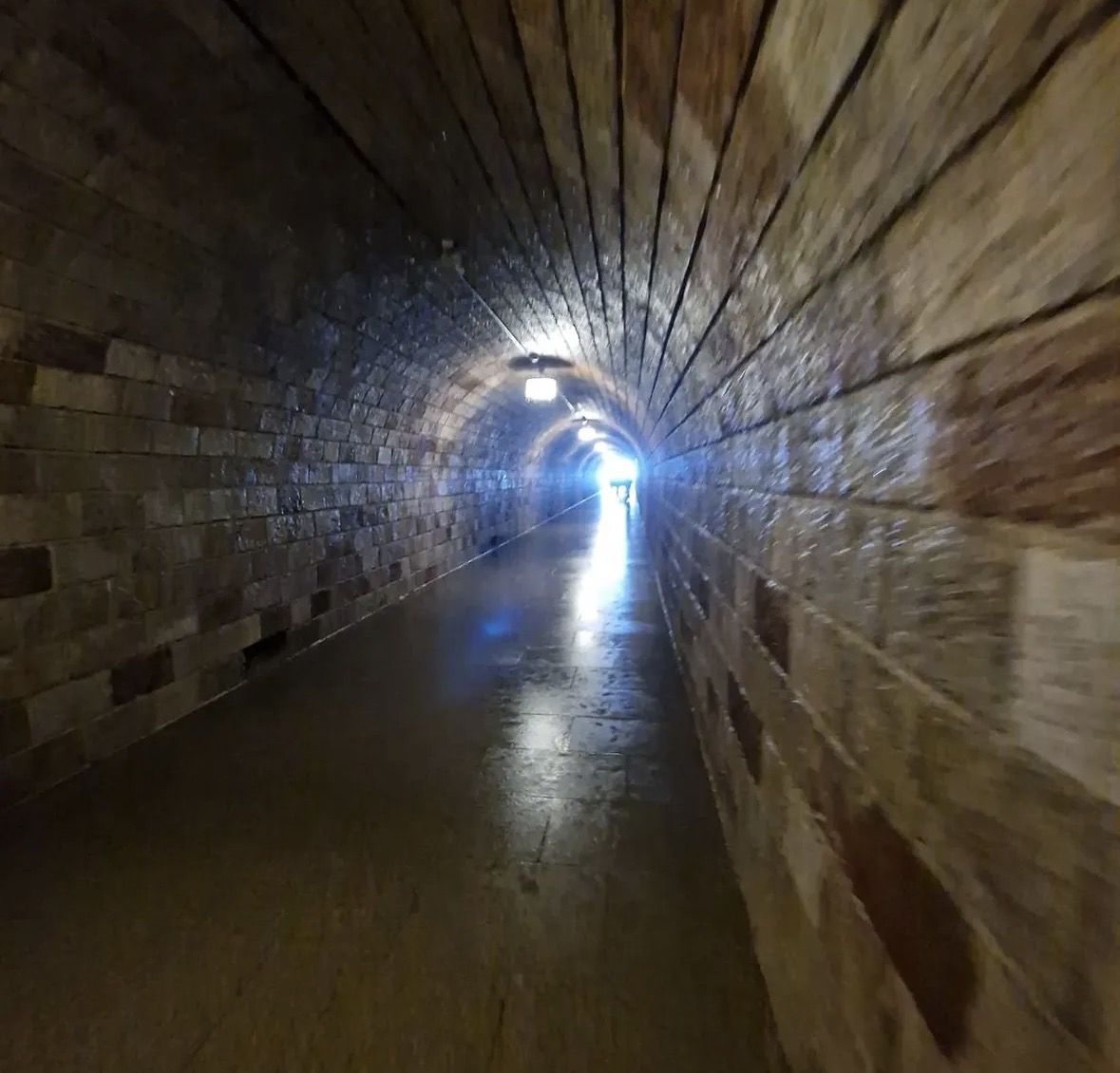
The road to the Eagles Nest is itself a feat of engineering bravado. The Kehlsteinstrasse winds for 6.5 kilometres from the Obersalzberg, gaining over 700 metres in elevation through five tunnels and across exposed ridgelines. At the road's terminus, visitors enter a tunnel bored 124 metres into the mountain, leading to the famous brass-lined elevator — lined with Venetian mirrors and warm lighting — that ascends directly to the teahouse floor. The road is so steep and narrow that only specially operated buses are permitted to drive it today, the same basic route used by Nazi officials and their guests over eighty years ago.
As Allied forces swept through Bavaria in the final weeks of World War Two, many of the Nazi buildings on the Obersalzberg — including Hitler's Berghof residence — were bombed by the Royal Air Force on 25 April 1945 and later demolished. The Eagles Nest, however, survived virtually intact. Its remote summit location made it impractical to bomb effectively, and American soldiers from the 101st Airborne Division, including officers of the famed Easy Company, reached the Kehlsteinhaus on 4 May 1945, famously discovering its wine cellar stocked with fine European vintages collected by the Nazi leadership.
The question of what to do with the Eagles Nest after the war was fiercely debated. Unlike the Berghof and other Nazi structures that were deliberately destroyed to prevent them becoming places of neo-Nazi pilgrimage, the Kehlsteinhaus was spared in large part because of its extraordinary architectural and historical significance. The building was transferred to the State of Bavaria, which in turn handed management to the Berchtesgaden Charity Foundation. In 1952, the teahouse reopened to the public as a mountain restaurant and has operated as such ever since, with profits directed toward charitable causes in the Berchtesgaden district.
The Eagles Nest gained renewed global fame through the HBO miniseries Band of Brothers, produced by Steven Spielberg and Tom Hanks and broadcast in 2001. The final episode depicted members of Easy Company, 506th Parachute Infantry Regiment, discovering and exploring the teahouse in May 1945 — a scene that introduced millions of international viewers to the site's extraordinary story. This cultural exposure, combined with growing interest in World War Two heritage tourism, transformed the Eagles Nest into one of Bavaria's most visited attractions, drawing approximately 400,000 visitors annually in peak seasons.
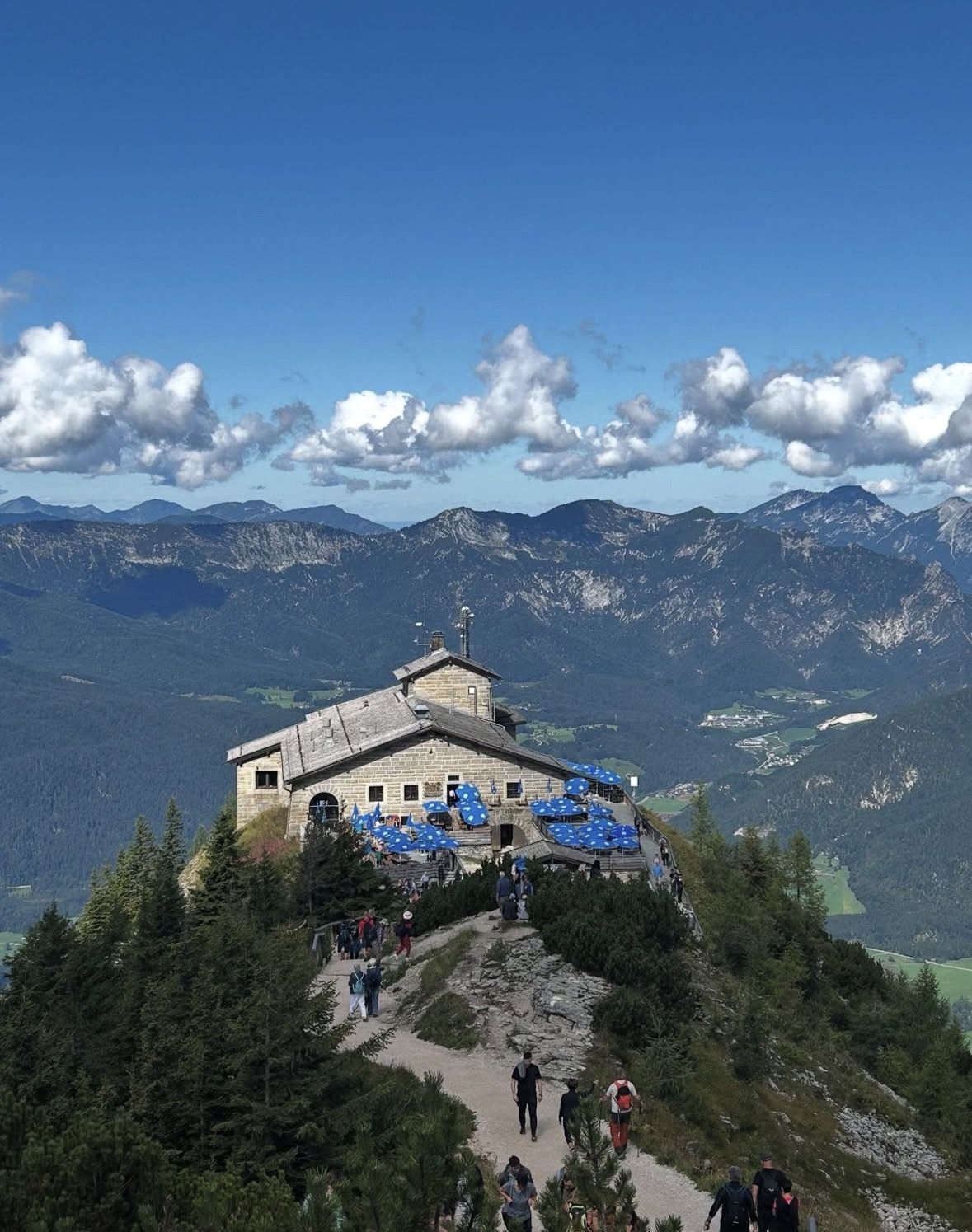
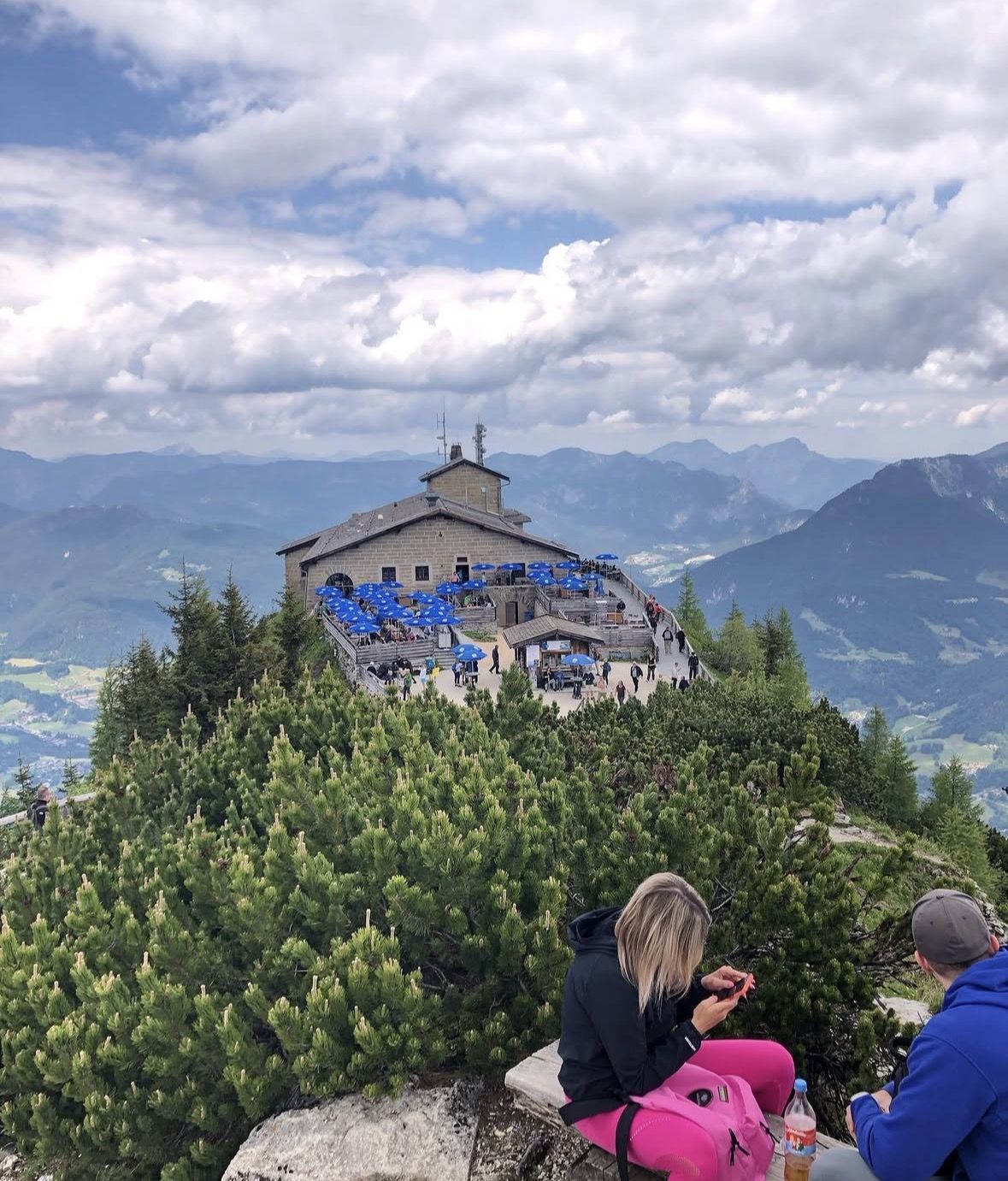
Today, the Kehlsteinhaus operates as a mountain restaurant and historical landmark from mid-May through October each year, when the access road is free of snow. Visitors travel by official bus service from the Kehlstein car park on the Obersalzberg, riding the historic road before stepping into the original tunnel and elevator to reach the summit. The interior has been carefully preserved, retaining original features including Mussolini's marble fireplace, the wood-panelled dining rooms, and the panoramic windows. The Berchtesgaden Documentation Centre nearby provides essential historical context, ensuring visitors understand the full weight of what they are experiencing.
Standing on the terrace of the Eagles Nest on a clear Bavarian morning, with the Alps stretching endlessly in every direction and the silence broken only by the wind, it is easy to understand why this place continues to captivate travellers from around the world. It is simultaneously a place of extraordinary natural beauty and profound historical gravity — a site where the machinery of evil and the grandeur of nature exist in uncomfortable proximity. Whether you are a history enthusiast, a lover of Alpine scenery, or simply a curious traveller, the Eagles Nest offers an experience that is utterly unlike any other in Europe. Come and discover it for yourself.
Ready to Experience It Yourself?
Guided Eagles Nest tours sell out weeks in advance during the summer season, so early booking is strongly recommended. Expert local guides bring the dramatic history to life while navigating the iconic mountain road, tunnel, and elevator on your behalf. Secure your place today and prepare for one of the most unforgettable experiences the Bavarian Alps have to offer.
Book Your Tour Now